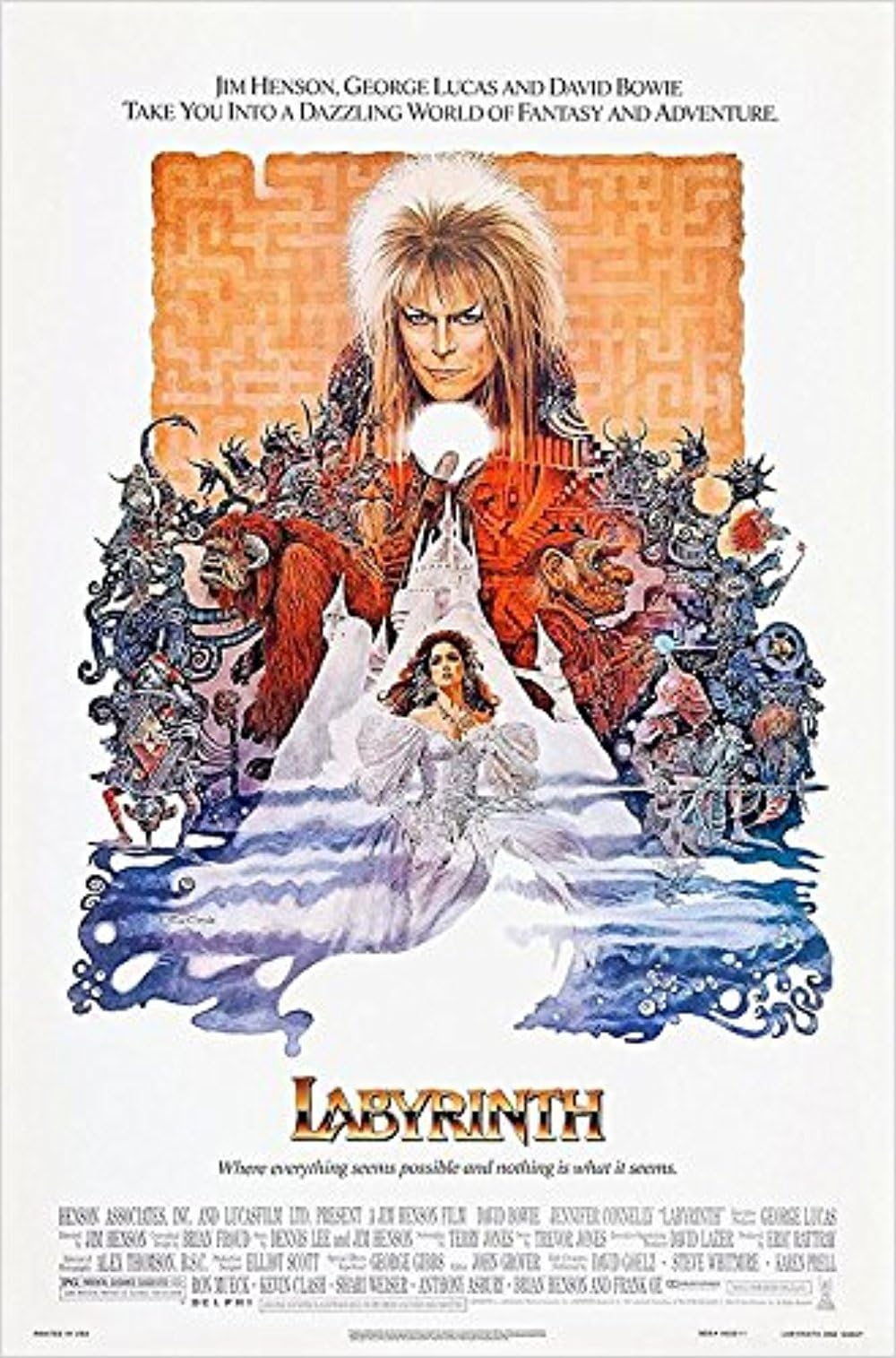
When Labyrinth was released in 1986, directed by the visionary Jim Henson, it represented a bold fusion of puppetry craftsmanship and fantastical storytelling. Henson, renowned for his revolutionary approach to puppetry through influential projects like The Muppet Show and Sesame Street, crafted a world teeming with eccentric charm and a beguiling visual aesthetic. Labyrinth stands as a testament to Henson's unsung genius, showcasing his ambition to blend whimsical adventure with deeper themes of personal growth and familial bonds, resonating with both children and adults alike.
The film takes viewers on a captivating journey through a richly constructed fantasy realm populated by magnificently strange creatures and magnificently imaginative set designs. While the narrative follows young Sarah, played with earnestness by Jennifer Connelly, as she attempts to navigate Jareth's (performed by David Bowie) labyrinth to rescue her baby brother, the storytelling often appears aimless. Critics have identified this as a flaw, yet many maintain that the charm of the film lies in its wacky sidekicks and unconventional structure, which harkens to classic literary influences reminiscent of Lewis Carroll's Alice's Adventures in Wonderland and Maurice Sendak's Where the Wild Things Are.
In terms of character development, the interactions between Sarah and her eclectic cast of companions highlight the film’s underlying themes. As Sarah battles her insecurities and matures through her encounters with both friend and foe, the depth of her character invites viewers to reflect on their own journeys of self-discovery. This thematic exploration, coupled with the film's visual inventiveness, elevates Labyrinth from mere children's fare to a work with classic potential, leaving a lasting impression on those who dare to revisit its fantastical landscapes.
Despite its initial lukewarm reception upon release, Labyrinth has since achieved cult status, considered one of the defining family movies of its era. The film’s unique combination of puppetry and live action continues to enchant new generations, while its eccentric charm and offbeat sense of humor ensure that it remains relevant in contemporary discussions of cinematic artistry. Critics and audiences alike celebrate Henson's craft, finding joy in revisiting a film that, while at times erratic, manages to convey heartfelt messages about love, courage, and the complexities of growing up.
Ultimately, Labyrinth serves as a reminder of the transformative power of imagination, demonstrating that when one navigates the wiles of life, much like Sarah in her quest, what is often stolen can also be regained, and what may initially seem inert can turn into a wonderfully wacky adventure. Henson's work may be viewed as an ambitious masterpiece that rightly holds a place in the annals of fantastical cinema; an enduring wonder that continues to invite explorations of its narrative depth and artistic complexity.