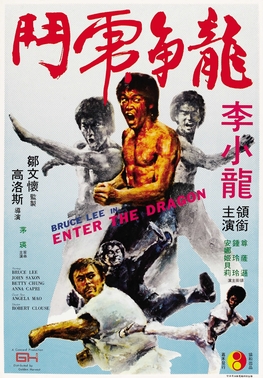
Enter the Dragon, directed by Robert Clouse, stands as a seminal film that solidified Bruce Lee's status as a cultural icon and revolutionized the portrayal of martial arts in cinema. Released in 1973, this film was among the first to blend the conventions of the martial arts genre with elements of Western action films, creating a crossover appeal that captivated audiences around the globe. Clouse, who had primarily worked in television before this project, managed to harness Lee's superhuman capabilities and legendary charisma, crafting a narrative that presented not just martial arts as combat, but as a beautiful, balletic art form.
The critical consensus surrounding Enter the Dragon highlights its thrilling action sequences and groundbreaking choreography. The film's fight scenes are often described as insatiable in their energy and efficiency, showcasing Lee’s unique ability to blend ferocity with grace. Reviewers have noted the occasionally jaw-dropping nature of the fights, which remain thrilling even decades after their initial release. These sequences were choreographed with an attention to detail that remains a benchmark for martial arts films, transforming what some might regard as mere fight scenes into mesmerizing performances that resonate with audiences on various levels.
Lee's performance is lauded as a defining moment in cinematic history, marking a turning point for martial arts in the West. His portrayal of the protagonist, Lee, is infused with an authenticity and depth that goes beyond mere physical prowess. Critics have remarked that he embodies both the ferocity of a warrior and the joyful spirit of a seeker of truth, making his legacy all the more poignant. The film's themes of justice, honor, and personal sacrifice are interwoven with the action, elevating the narrative beyond the typical blaze of glory associated with martial arts films.
Moreover, Enter the Dragon serves as a testament to Lee's own philosophy regarding martial arts and combat, the notion that physical skill is inseparable from mental discipline and spiritual growth. As the film progresses, it becomes evident that these principles are not merely for show, but rather, they are foundational to the characters' journeys. The film succeeds in creating a narrative that is thrilling and thought-provoking, one that heralds the martial arts genre into a new era of cinematic appreciation.
In looking back at Enter the Dragon, it is clear that its influence has shaped not only the perception of martial arts films but also action cinema as a whole. The legendary status of Bruce Lee, coupled with the film's efficient storytelling and exhilarating action, has left an indelible mark on film history. Today, Enter the Dragon remains a joyful, exciting experience that continues to inspire filmmakers and audiences alike, securing Bruce Lee’s legacy as an unassailable figure in the annals of cinema.