Career Overview
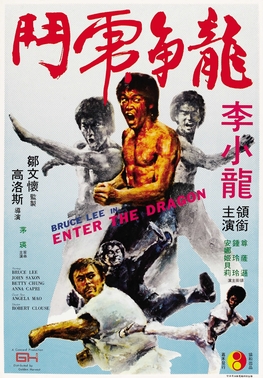
Robert Clouse occupies a monumental position in transnational cinema history, largely defined by his groundbreaking work on Enter the Dragon. Operating as a pragmatic and highly effective studio helmer, Clouse served as the crucial bridge between the insular world of Hong Kong martial arts cinema and the global machinery of the Hollywood studio system. His career arc is characterized by an ability to take niche genre elements and package them for mass consumption without entirely diluting their visceral impact.
Contextualizing Clouse requires looking closely at the cinematic landscape of the early 1970s. Before his most famous production, martial arts films were largely sequestered in regional markets and grindhouse theaters. Clouse became the vessel through which a major Hollywood studio first produced a kung fu film, irrevocably altering the global trajectory of action cinema. He provided the necessary Western cinematic grammar to translate unfamiliar fight choreography into a language global audiences could immediately understand.
While his legacy is inextricably linked to the meteoric rise and tragic passing of his star, Clouse deserves recognition for his steady hand. The cultural footprint of Enter the Dragon often overshadows Clouse as an individual auteur, but his historical significance as the architect of this crossover phenomenon is undeniable. He cemented a new paradigm for action filmmaking, proving that cross-cultural collaborations could yield massive commercial and artistic dividends.
Thematic Preoccupations
The primary thematic preoccupation evident in Clouse's defining work is the collision of Eastern martial arts philosophies with Western genre conventions. His central narrative often revolves around themes of infiltration, systemic corruption, and the perversion of spiritual disciplines by capitalistic or criminal enterprises. The protagonist is typically positioned as an outsider entering a decadent environment to restore a sense of moral and spiritual balance.
Clouse wrestles heavily with the legacy of the martial artist as an incorruptible figure. The hero acts as a spiritual purifier, infiltrating a space defined by Bondian excess to root out a villain who has forsaken traditional values for an illicit empire. This dynamic reflects a broader cultural anxiety of the 1970s regarding tradition versus modernity, contrasting the purity of physical discipline against the corrupting influence of global organized crime.
Furthermore, his filmography explores the conceptualization of the superhuman within a grounded reality. The narrative framework is engineered to showcase almost mythological physical abilities, elevating the martial artist from a mere fighter to a legendary hero. Critical discourse frequently compares his protagonist to later icons like Jackie Chan or contemporaries like David Carradine, highlighting how Clouse established a foundational thematic template for how Western audiences perceive and categorize martial arts heroism.
Stylistic Signatures
Clouse operates with a distinctly efficient and pragmatic visual style. Rather than overwhelming the frame with unnecessary stylistic flourishes, he utilizes an unobtrusive camera to capture the balletic and occasionally jaw-dropping movements of his performers. His direction prioritizes spatial clarity and geographic awareness during complex sequences, ensuring that the audience can fully appreciate the intricate choreography without the distraction of hyperactive camerawork.
He frequently embraces a hybrid aesthetic, merging the gritty, grounded realism of 1970s crime thrillers with the flamboyant production design of espionage blockbusters. Critics often note the presence of Bondian excess in his environments, utilizing island fortresses and colorful underground lairs as vivid backdrops for mesmeric combat. This juxtaposition creates a unique visual vocabulary that grounds joyful, highly theatrical fights within high-stakes, globally recognizable genre tropes.
Editing rhythms in Clouse's work are carefully calibrated to emphasize the physical prowess of the onscreen talent. Instead of relying on rapid cuts to manufacture artificial momentum, Clouse allows the thrilling, superhuman skills of his subjects to dictate the pacing of the scene. This stylistic choice demonstrated that optimum thrill is best achieved by honoring the performer's absolute conviction in long takes, rather than relying on cinematic trickery to simulate impact.
Recurring Collaborators
While Clouse collaborated with various industry professionals throughout his life, his critical footprint is universally anchored by his defining partnership with Bruce Lee. Lee provided the absolute conviction and superhuman skills necessary to legitimize Clouse's directorial vision. Their partnership was foundational, with Lee serving as both the thematic core and the kinetic engine of Enter the Dragon.
This central collaboration was less a traditional Hollywood dynamic and more a symbiotic convergence of studio pragmatism and martial arts mastery. Clouse provided the efficient narrative framework, the necessary pacing, and the studio resources, while Lee delivered the mesmerizing choreography and philosophical weight that earned him an insatiable army of fans. It was a partnership of mutual elevation, translating Lee's distinct ideology through Clouse's commercial lens.
Although the database highlights no other recurring cast members across multiple films, the ensemble strategy utilized in his seminal work reveals Clouse's reliance on diverse, highly specialized talent. He populated his environments with contrasting physical types and dedicated stunt professionals to endure the grueling demands of the action. By surrounding his primary star with capable international martial artists, Clouse ensured that the balletic combat sequences maintained a rigorous standard of authenticity.
Critical Standing
Robert Clouse occupies a fascinating and somewhat paradoxical space in critical discourse. He is rarely analyzed through the lens of traditional auteur theory, as critics frequently argue that the legend of Enter the Dragon is ultimately bigger than the film itself. Instead, he is widely heralded as a highly effective facilitator who successfully integrated a revolutionary talent into the global mainstream, utilizing efficiency to maximize impact.
Retrospective evaluations frequently celebrate his defining work as a daft yet historically crucial hybrid of martial arts and Western espionage tropes, with critics often drawing favorable comparisons to the Our Man Flint series. Clouse is praised for his workmanlike precision and his ability to extract optimum thrill from a concept that could have easily collapsed under its own excess. Reviewers appreciate his commitment to letting the action breathe, noting that the balletic moves he captured remain a joy to watch.
Ultimately, Clouse's critical reputation is inextricably bound to the monumental legacy of Bruce Lee. While purists may occasionally debate the cinematic merits of his Westernized framing compared to native Hong Kong productions, Clouse remains universally recognized for directing the first kung fu film produced by a major Hollywood studio. This undisputed milestone secured his permanent place in film history, cementing his work as a joyful, groundbreaking bridge between distinct global cultures.