Career Overview
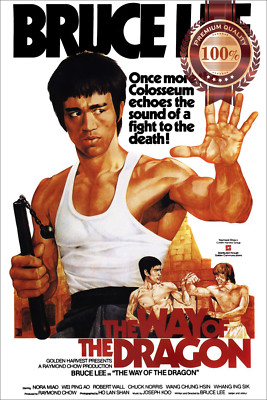
Bruce Lee occupies a singular, highly mythologized space in global cinema history. His transition from an electrifying on-screen presence to a film director demonstrated his ambition to control his own cinematic narrative. With his seminal directorial effort, The Way of the Dragon, Lee attempted to bridge the Hong Kong martial arts tradition with broader international appeal. This trajectory was tragically cut short by his sudden demise, an event that forever cemented his legacy as a playground and popular myth.
Because of his untimely death, assessing Lee strictly as a director requires untangling the filmmaker from the cultural icon. Critics often note that his final completed works reside in cinema history a few notches above where their objective quality levels might actually warrant. However, his efforts as a creator laid the vital groundwork for the modern action genre. He established a narrative template that subsequent action directors would emulate and iterate upon for decades.
Lee navigated the complex intersections of Eastern and Western cinematic traditions. By bringing his Hong Kong sensibilities to international settings, such as the Roman backdrop in The Way of the Dragon, he crafted a daft but potent hybrid of martial arts cinema and Hollywood spectacle. His unyielding ambition paved the way for future cinematic milestones, allowing his distinct vision to influence a wide array of genres and cross-cultural action narratives.
Thematic Preoccupations
At the core of Bruce Lee's directorial vision lies an enduring fascination with power dynamics and cultural displacement. The narrative engine of The Way of the Dragon centers on a martial artist traveling to Rome to protect relatives from local gangsters, setting the stage for bloody confrontations and rigorous examinations of authority. Lee frequently situates his heroes as outsiders who must navigate hostile, unfamiliar territories while remaining fiercely tethered to their cultural identity.
Beneath the surface of his briskly paced action sequences, Lee explores the hidden infrastructures of immigrant communities. Critics frequently invoke the thematic trope of Chinatown when discussing his preoccupations. Behind the gimcrack gift shops, the poultry markets, and the pagoda-tiered tourist restaurants, Lee suggests that real, often malignant power exists. This hidden world turns his films into compelling narratives about exploitation and the necessity of communal resistance.
Furthermore, Lee shows an intense preoccupation with the philosophy of combat itself. For the director, a showdown is never merely physical; it is an ideological clash. The climactic battles in his work serve as the ultimate resolution of the investigation themes that weave through his plots. Whether dealing with adaptation challenges or straightforward criminal harassment, the martial arts confrontations become the primary vehicle for delivering justice and restoring equilibrium to a fractured community.
Stylistic Signatures
Bruce Lee developed a western-influenced style that prioritized a gallery of memorable moments over seamless narrative cohesion. His films are often characterized by an electric atmosphere and a brisk, twisty plot that keeps the momentum pushing relentlessly forward. Critics occasionally note that this approach results in disjointed storytelling and underdeveloped characters, yet the sheer visceral impact of his visual language largely compensates for these structural deficiencies.
The true hallmark of a Bruce Lee film is his revolutionary approach to capturing action sequences. He eschewed the chaotic, rapid-fire editing that would later dominate the genre, opting instead for wide framing and deliberate pacing that allowed the audience to fully appreciate the physical mastery on display. His staging is meticulous, turning every bloody confrontation into a rigorously choreographed dance that builds agonizing tension toward an inevitable climax.
Nowhere is this stylistic signature more apparent than in the final, Coliseum-set showdown in The Way of the Dragon. Utilizing the iconic Roman ruins as an epic, ancient backdrop, Lee crafted what many critics still consider the best combat sequence ever shot. By blending elements of Bondian excess with the stark, stripped-down reality of his martial arts philosophy, he created a visual language that feels simultaneously mythic and grounded.
Recurring Collaborators
While traditional frequent cast members are scarcely identified across a strictly defined multi-film directorial canon, Bruce Lee's creative partnerships are intrinsically tied to his on-screen adversaries and his vast posthumous influence. In The Way of the Dragon, his collaboration with martial artist Chuck Norris remains his most famous directorial casting choice. Norris provided the necessary physical and philosophical counterweight to Lee, enabling the film to achieve its legendary climax in the Roman Coliseum.
Beyond direct cast members, Lee's work operates in conversation with a broader network of filmmakers and writers who expanded upon his blueprint. Critics frequently evaluate his directorial legacy through the lens of those who took up his mantle. Discussions of his brisk and twisty narratives often draw comparisons to the later works of Peter Ho-Sun Chan and martial arts star Donnie Yen, who are noted as being too resourceful to let things remain dull for long in their own western-influenced historical epics.
Similarly, the thematic seeds planted by Lee regarding criminal power dynamics within Chinese immigrant enclaves found subsequent expression through writers like Oliver Stone and directors like Michael Cimino. Reviewers analyzing the legacy of Lee's cinematic universe frequently note how subsequent creators rebuilt these foundational concepts from the ground up in films like Year of the Dragon. Thus, Lee's most significant recurring collaborators might be understood as the generations of action choreographers, directors, and stars who continually iterate on the precise combat language he single-handedly established.
Critical Standing
The critical standing of Bruce Lee as a director is a complex tapestry of genuine reverence and acknowledged structural limitations. Contemporary reviews and retrospective analyses alike agree that The Way of the Dragon succeeds primarily as a phenomenal vehicle for Lee's immense physical charisma. Establishments like Empire Magazine point out that the film operates as a hybrid of martial arts and spy thriller tropes, yet they simultaneously declare it the home of the finest combat sequence in cinema history.
This duality defines Lee's place within critical discourse. Detractors often highlight the disjointed storytelling and underdeveloped characters, viewing some of his narrative choices as mere Hollywood attempts to muscle in on emerging commercial trends. However, these critiques are frequently overshadowed by the undeniable cultural weight of Bruce Lee's legacy. Reviewers readily admit that his tragic demise elevated his final works into the realm of popular myth, ensuring his films reside at a level of prestige that pure technical evaluation might not entirely support.
Over the decades, Lee's directorial efforts have been heavily benchmarked against an array of cinematic touchstones. His singular ability to blend Eastern combat with Western narrative forms invites frequent comparisons to genre-defining films such as A History of Violence, The Departed, and The Bourne Identity, as well as martial arts spectacles like Crouching Tiger, Hidden Dragon and Hero. Ultimately, Lee is canonized not just for the films he completed, but for the electric atmosphere he introduced to global cinema, forever changing the trajectory of the action film.