Career Overview
John Badham occupies a distinct space in the landscape of late twentieth-century American cinema, operating at the exact intersection of mainstream commercial entertainment and prescient cultural commentary. Emerging from a robust background in television direction, Badham cultivated a meticulous understanding of narrative pacing and audience engagement. This foundational experience in episodic storytelling honed his ability to craft highly efficient, well-directed features that rarely sacrificed momentum for spectacle. His transition to feature films demonstrated a filmmaker who understood the mechanics of the Hollywood studio system while harboring a subtle, intelligent curiosity about the changing technological landscape.
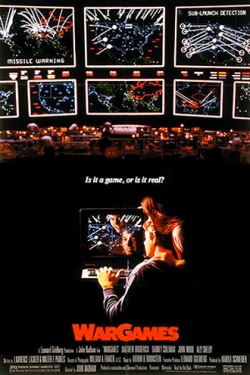
The defining cinematic artifact in this critical evaluation is WarGames, a film that perfectly encapsulates Badham's unique directorial position. Released during the height of Cold War paranoia, the project solidified his reputation as a director capable of translating complex geopolitical dread into an accessible, charismatic adventure. Badham proved uniquely adept at balancing the terrifying realities of the era with a sleek, highly polished visual style. His approach elevated what could have been an unsatisfying mainstream effort into a smart, thought-provoking thriller that commanded both box office success and enduring critical respect.
Ultimately, Badham's position in cinema history is that of a skilled craftsman who inadvertently became a visionary of the digital age. By tapping into growing societal fears regarding computer technology and automated defense systems, he crafted narratives that feel remarkably timeless. His work remains a crucial touchstone for film students and critics analyzing the evolution of the techno-thriller, showcasing a director who could seamlessly weave apocalyptic anxieties into the fabric of a teenage rebellion narrative.
Thematic Preoccupations
The primary philosophical obsession running through John Badham's evaluated work is the precarious intersection between human fallibility and automated global security. Badham repeatedly questions the blind faith placed in complex computer technology, specifically within the military-industrial complex. In WarGames, the looming threat of nuclear war is abstracted into a digital simulation, highlighting the terrifying reality of removing human judgment from apocalyptic decision-making. The director explores how the digitalization of warfare reduces catastrophic mass destruction to mere data points on a screen, asking profound questions about accountability in a hyper-connected world.
Intertwined with this technological dread is the theme of teenage rebellion, which Badham uses as a catalyst to expose the vulnerabilities of adult institutions. The protagonist in WarGames represents a new generation of digital natives whose innocent curiosity and anti-authoritarian impulses inadvertently bring the world to the brink of annihilation. This dynamic serves as a stark critique of the rigid, unimaginative frameworks of military authority. Badham posits that the true threat is not necessarily the rebellious youth, but rather the fragile, easily compromised systems built by older generations to enforce global order.
Furthermore, the overarching concern of cybersecurity renders Badham's work chillingly prescient. Long before the widespread public adoption of the internet, he was exploring the existential risks of network intrusion and hacking. The conceptual seeds planted here draw direct thematic comparisons to later dystopian and cybernetic narratives like The Terminator and The Matrix. By framing these high-tech vulnerabilities within an engaging, suspenseful narrative, Badham successfully codified the modern cyber-thriller, making abstract concepts of data manipulation both scary and intellectually stimulating.
Stylistic Signatures
John Badham's stylistic approach is defined by a sleek, high-tech visual language that contrasts the mundane realities of adolescence with the imposing, sterile environments of military authority. He frequently employs a juxtaposition of scale, shifting from the cluttered, intimate spaces of a teenager's bedroom to the cavernous, overwhelming architecture of government control rooms. This visual dichotomy emphasizes the disparity in power while simultaneously underscoring the irony that a solitary individual in a modest setting can compromise a billion-dollar defense infrastructure. His framing is precise, ensuring that the technology itself feels imposing and ever-present.
A hallmark of Badham's cinematic technique is his ability to generate suspenseful and thrilling momentum from inherently static activities, such as typing on a keyboard or staring at a monitor. The director relies on a well-paced editing rhythm that mirrors the escalating tension of a ticking clock. By integrating close-ups of CRT screens, flashing text, and the rhythmic clatter of computer hardware into his audiovisual soundscape, he treats the technology not merely as a prop, but as an active, breathing antagonist. This approach transforms abstract data processing into a visceral, engaging cinematic experience.
Furthermore, Badham utilizes sound and music to heighten the eerie, chilling atmosphere of his narratives. The synthetic beeps and electronic pulses of modems and mainframes serve as a distinctive auditory signature, grounding the speculative fiction in a convincing, believable reality. His mise-en-scene is meticulously crafted to convince the audience of the film's technical literacy, ensuring that the high-stakes narrative remains rooted in a plausible, if terrifying, reality. This careful attention to environmental detail prevents the thriller elements from devolving into unsatisfying mainstream cliche.
Recurring Collaborators
While an expansive view of John Badham's filmography reveals various creative partnerships, an analysis of the provided critical database highlights the vital importance of his collaboration with actor Matthew Broderick. In WarGames, Broderick serves as the essential human anchor for a narrative dominated by cold, unfeeling technology. The actor's performance is universally praised as charming and believable, providing the charismatic center required to engage a mainstream audience. Badham leans heavily on Broderick's boyish innocence to create a stark contrast against the apocalyptic stakes of the plot.
This dynamic between director and star is crucial for navigating the film's complex thematic terrain. Badham utilizes Broderick's natural screen presence to make the potentially dry subject matter of cybersecurity and computer hacking emotionally resonant. The actor's ability to project intelligence and teenage rebellion allows the director to humanize the high-tech adventure. Without a protagonist who is simultaneously smart and inherently sympathetic, the chilling implications of the technology would fail to connect with the viewer on a visceral level.
Equally significant is the foundational contribution of the screenwriting team, specifically the involvement of co-writer Lawrence Lasker. Badham's directorial execution is intrinsically linked to the smart, intelligent framework provided by the script. Lasker's imaginative integration of Cold War anxieties with emergent computer culture gave Badham the precise architectural blueprint needed to construct a timeless thriller. Together, the synthesis of Lasker's prescient concepts, Broderick's standout performance, and Badham's sleek direction results in a seminal cinematic achievement.
Critical Standing
John Badham occupies a fascinating and complex position within critical discourse, frequently evaluated as a purveyor of mainstream Hollywood entertainment who consistently achieved moments of striking thematic depth. Critics note that his work, particularly WarGames, operates successfully on dual levels, functioning both as an entertaining adventure and a scary, cautionary tale. Initial reception often praised his ability to craft suspenseful narratives that felt immediately relevant, capturing the zeitgeist of a society grappling with the dawn of the information age. He is widely respected for his technical proficiency and his reliable execution of big-deal, high-stakes cinema.
Over time, Badham's critical reputation has evolved, with retrospective analyses increasingly emphasizing the eerie prescience of his technological thrillers. Contemporary critics frequently draw conceptual lines from his foundational work to later science fiction milestones, using comparisons to The Terminator or The Matrix to validate his influence on the genre. The themes of cybersecurity and automated warfare that he explored decades ago are now recognized as chillingly accurate prophecies of modern geopolitical vulnerabilities. Consequently, WarGames is often cited not just as a cultural artifact of the 1980s, but as a timeless warning about technology spiraling out of control.
Despite occasional dismissals by some purists who view his output as rooted in unsatisfying mainstream conventions, Badham's best work fiercely resists such categorization. The critical consensus remains that he was a highly intelligent filmmaker who knew how to manipulate audience expectations while delivering a compelling, thought-provoking message. By maintaining a chilling grip on the imagination long after the initial theatrical release of his films, Badham has secured a legacy as a visionary architect of the modern techno-thriller, revered by cinephiles for his seamless blend of entertainment and existential dread.