Career Overview
John Hughes occupies a monumental position in modern cinema history as the definitive architect of the American teen film. Emerging from a background in advertising copywriting, he transitioned into screenwriting and directing with a singular focus on the interior lives of suburban youth. His chronological development showcases a rapid maturation from broad comedy to nuanced sociological portraits, establishing a cinematic vocabulary that treated adolescent anxieties with unprecedented earnestness.
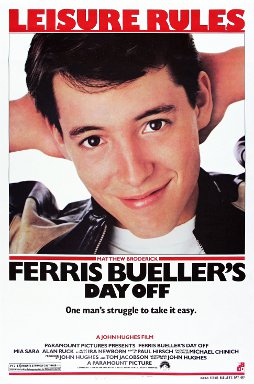
The release of Ferris Bueller's Day Off stands as a definitive triumph for the writer and director. This work crystallized his ability to merge commercial viability with sharp cultural observation. By focusing on the affluent lifestyle of Chicago adolescents, Hughes carved out a specific geographic and demographic niche that became the hallmark of his directorial brand. His films transcended mere entertainment to become cultural touchstones for an entire generation.
In the later stages of his career, Hughes expanded his scope to include broader family entertainment, drawing critical comparisons to his later scripted works like Home Alone. However, his most enduring legacy remains his mid 1980s directorial output. Through his precise rendering of upper-class Midwestern existence, he elevated the teen genre from exploitation fodder to respectable cinematic art, cementing his status as a masterful chronicler of American youthful rebellion.
Thematic Preoccupations
The philosophical core of Hughes's filmography is deeply rooted in the concept of youthful rebellion set against the backdrop of an affluent lifestyle. He obsessively returns to the tension between adolescent freedom and the suffocating comforts of suburban life dynamics. In Ferris Bueller's Day Off, the protagonist's rebellion is not a desperate flight from poverty or abuse, but rather a calculated rejection of the mundane expectations placed upon the privileged class.
This exploration of affluence in society is often presented with a celebratory tone, yet it contains subtle critiques of materialism. The characters exist in a hermetic upper-middle-class suburban milieu, where their upbringing allows them the luxury of flitting through urban landscapes as if they own them. Critics have frequently noted that this unadulterated celebration of being young, white, and well-heeled in mid 1980s America serves as both a fantasy and a realistic reflection of the era's economic excesses.
Furthermore, a profound sense of nostalgic reflection permeates his narratives. Hughes captures the fleeting nature of adolescence with a celebratory nostalgia, recognizing the impact of youth culture as a temporary utopian state before the onset of adult responsibilities. This persistent nostalgia transforms seemingly trivial high school escapades into mythic quests for identity, making his thematic focus both deeply personal and universally resonant.
Stylistic Signatures
The visual language of John Hughes is characterized by a pristine, warmly lit aesthetic that emphasizes the insulated safety of the American suburb. His spatial arrangements frequently highlight spacious domestic interiors and manicured neighborhoods, utilizing the physical environment to underscore the affluence of his characters. This bright cinematography serves to elevate the everyday reality of his subjects into an idealized, almost dreamlike state of existence.
In terms of editing and narrative structure, Hughes often employs a kinetic rhythm that mirrors the erratic energy of his youthful protagonists. He seamlessly interweaves musical montages with direct-to-camera addresses, breaking the fourth wall to foster an immediate, complicit intimacy between the viewer and the screen. This stylistic choice effectively collapses the distance between the audience and the rebellious spirit of the narrative, inviting viewers to participate directly in the cinematic escapade.
Soundtrack selection remains one of his most recognized stylistic signatures. Hughes pioneered the use of curated contemporary pop and post-punk music as an emotional anchor for his scenes, moving beyond traditional orchestral scoring. The music acts as an internal monologue for his characters, amplifying the nostalgic elements and the celebratory tone of the films while permanently linking his visual aesthetics to the definitive sounds of 1980s youth culture.
Recurring Collaborators
While the specific database parameters indicate no recurring cast members across multiple films in this isolated dataset, a comprehensive understanding of Hughes requires acknowledging his broader approach to casting and crew. He famously operated by cultivating a rotating repertory of young talent who could embody the distinct archetypes of suburban youth. This strategy allowed him to populate his hermetic upper-middle-class worlds with performers who understood the specific tonal register of his dialogue.
These young actors served as crucial vessels for his meticulously crafted scripts, delivering performances that balanced arrogance with vulnerability. The success of films like Ferris Bueller's Day Off relied heavily on the undeniable charisma of its leads, who had to navigate the luxury of flitting through their adventures without alienating the audience. The performers provided the essential human element that made the unadulterated celebration of privilege palatable and charming.
Behind the camera, Hughes consistently partnered with skilled cinematographers and editors capable of rendering his vision of affluent Chicago suburbs with glossy precision. These technical collaborations were vital in maintaining the visual continuity of his filmography. By surrounding himself with a dedicated crew who understood his pursuit of celebratory nostalgia, Hughes was able to maintain strict creative control and authorial consistency across his most impactful works.
Critical Standing
The critical reputation of John Hughes has undergone a fascinating evolution since his peak commercial dominance. Initially, contemporary reviews from publications like the Los Angeles Times embraced his films as massive mainstream achievements, noting how Ferris Bueller's Day Off became the sleeper hit of the summer. During this period, he was celebrated primarily as an expert populist filmmaker who possessed an uncanny understanding of the teenage demographic.
In subsequent decades, the critical discourse surrounding his filmography has grown more rigorous and sociologically focused. Modern outlets like Slant Magazine and Empire frequently contextualize his work within the conservative political climate of the 1980s. Analysts point out that his narratives are deeply ensconced in a hermetic upper-middle-class milieu, dissecting how the rebellious spirit of his protagonists is fundamentally cushioned by profound socioeconomic privilege and a lack of real world consequences.
Despite these valid critiques regarding his insular focus, Hughes maintains a formidable and respected place within critical cinema studies. Comparisons to his other landmark films like The Breakfast Club and Sixteen Candles demonstrate his unparalleled influence on the coming-of-age genre. Ultimately, his ability to treat the suburban teen experience with genuine artistic gravity ensures that his celebratory nostalgia remains a vital subject of analysis for art critics and cinephiles alike.